Wednesday, January 2, 2019

Nemesis of Reason (Part 1?)

Words describing it fail, pages relating to it are paywalled, tales recounting it are ordered to cease and desist
Elsevier (1880 colorized)
There is an old joke from the Soviet Union that I like to retell, and it goes something like this:

An old man is distributing pamphlets in the street. This is very obviously counter-revolutionary political activity, so as soon as the police walk by they arrest him, and being good Communists they don't even glance at the contraband pamphlets as they seize them; their captain will know what to do.

The captain looks over the pamphlets and then storms into the interrogation room.

"These pamphlets are blank!"

The old man shrugs.

"What can I say that we do not all know already?"

This post might as well be one of those pamphlets.

Because everyone already knows that for-profit academic publishing is a racket; we are all perfectly aware that Elsevier is the Nemesis of Reason.

Or at least we ought to be. Because it is fucking obvious.

In 2017 the RELEX Group, Elsevier's parent company, reported an operating margin of 32%. Since the RELEX Group has some side hustles in data analytics, to isolate their profits from academic publishing I'll take Their science and technical division (pg. 14), which has the Elsevier brand along with such familiar names as The Lancet, Cell, and Science Direct, reported an operating margin of 37.5%.

https://www.relx.com/~/media/Files/R/RELX-Group/documents/reports/annual-reports/relx2017-annual-report.pdf

These are the kind of margins more typically associated with criminal enterprises (for reference, Apple's operating margin was ~26%) But when you think about it, (and by think about it I mean do some critical thinking and basic arithmetic) it gets worse.

98% of their revenue is from collecting tolls as gatekeepers of information. 81% of their revenue is from electronic access. So 80% of their revenue (about ~$2.4 billion) is from gate-keeping digital content. The marginal cost of copying something digitally ins't exactly of something isn't exactly zero, but its so damn close I'm willing to call it zero.

The Racket from the Perspective of Producing the Marginal Article

An analytical distinction needs to made in analyzing the market for journal articles: are we counting the creation of the marginal article or the marginal copy of an article? That electronic copies of articles, journals, access to digital archives, etc. are overpriced is obvious (and I'll make that case in more detail later), but what about the production of a marginal article?

If we think about the production of the marginal article there are clearly costs in preparing the marginal article for publication; Elsevier claims to employ 20,000 (paid) editors.

But Elsevier does not, has not, will not, and can not pay people to write the 1.6 million articles that were submitted to Elsevier in 2017, or the 430,000 that were published. Except for those who were published in the double handful (190 out of the 2500) open access journals, those people either volunteered their labor or paid for the privilege of publishing open-access in a hybrid journal.

And what Elsevier demands as compensation for making an article isn't a pittance. The fee varies between journals, but the average the price charged is around $2300.

If they didn't charging people for the privilege of adding knowledge to their hoard, how much would it cost to actually pay all those people to to produce all that content? How much would it cost to run all of Elsevier as open access?

 If we are actually paying authors, at 430,000 publications, at, say 4000 words each and $1 per word (which is practically robbery for high-skill technical writing) that means it would cost Elsevier around $1.7 billion to actually, you know, pay their authors.

But of course, scholars don't write for money, (at least not directly). They write, for the love of learning, to clarify their own ideas, to qualify for tenure, to gain social status. In short, they write for intrinsic motivations, and for what the Hellenes would have called kleos, what we will call prestige.

Which is to say they are willing to write for free. Or at least, free from the perspective of their publisher.

The Elsevier makes basically all its money from people giving them things for free and then engaging in arbitrage; a business model more typically associated with solid waste management.

Is Volunteering  For Suckers?

Elsevier's fees for open access give us a floor for the expected present value of (lifetime!) revenue derived from the publication of the marginal article. Since the whole operation turns a profit, it must be the case that those revenues are at least sufficient to cover the costs. So we can use these fees estimate a lower bound of those publication costs.

Taking Elsevier's assessments at face-value (although I suspect the true number is lower) it would cost no more than $990 million dollars to have published everything in 2017, all 430,000 articles, as open-access.

The volunteerism of scientists and scholars in writing, submitting, and revising academic and technical publications is a precious resource, one that should probably be managed with care instead of being squeezed for profit.

But its not just individuals who are volunteering. Institutions of higher education invest sometimes staggering sums of money to enable their faculty to produce research, which is then given away to Elsevier who then charges those same universities to access the research they produced.

Frankly, I am astonished to see any institution acting so selflessly.

But it would make a lot more sense for someone to just cough up the billion dollars needed to make all this stuff, which is given away in a spirit of charitable goodwill to benefit everyone, actually available to everyone.

OK, but who would pay for that?

That is something that could be paid for entirely by a large non-profit,  the federal government, or a consortium of American universities. Since part of the point of the American academy is for education to subsidize research, a $50 charge per student,  across all of America's ~20 million college students, could pay for making all of Elsevier's publications in that year open access.

As for archiving and hosting older publications, it'd be another $10 more; the Wikimedia Foundation makes do with an annual budget of $80 million.

In fact, I think the Wikipedian model is a good vision for the future of academic publishing. Not the "everyone can edit" part. But an open and accessible resource, maintained and sustained by a vast community of volunteer editors and contributors. After all, Elsevier's business model could basically be described as "like Wikipedia, but paywalled".

This whole analysis has been done with out estimating the social costs, social benefits, the long run drag on innovation, etc. All that could wait for another post. And I'm not trying to pick on Elsevier in particular, any for profit academic publisher would behave the same way.

But I hope alternative structures for academic publishing are possible.

It doesn't have to be this way.

[N.B. draft]

Friday, August 17, 2018

What is the Base Rate of Terrorism?

This is dumb


Los Angeles Metro will be the first U.S. transit agency to use a security system created by the federal Transportation Security Administration to scan riders as they enter the system, the agency announced this week. New York and San Francisco has also been testing the technology, which TSA says will thwart terrorism or mass shootings. The agency says it plans to install the system at transit stations around the country, the New York Times reports.

Why is it dumb?

First, ut degrades the experience of passengers by making the environment more hostile, encouraging distrust, and slowing down people's movement. Security theater is dumb, and honestly I doubt it actually makes people feel safer. I suspect that if you act like there is a threat people will assume (not unreasonably!) that there actually is a threat. 


Second, its a misallocation of resources. The thing about security and "hardening" targets against terrorism, is that you can't defend everything because of resource constraints. 

To quote Frederick the Great: "He who defends everything defends nothing".Hardening targets against terror doesn't disrupt plots, it just causes them to shift their targets. In a city there are essentially infinitely many "soft" targets for terrorists.

Security measures like these (if they even work!) cost money but mostly just shift risk around, making places safer without making people safer. That's not always a dumb idea, but in this case it is - about 80 people die in transit rail accidents any given year, whereas there hasn't been a terror attack on any American metro in,  well, ever.

But the main reason that this is a dumb idea, the one that beats out all the rest, is this:

The base rate of terrorism is low


Terrorism is a tactic, it isn't defined by its weapons - terrorists don't have to use bombs.
Alternative definition

Terrorists can use guns, cars, knives, etc. And getting access to all tools of terror in America is frankly trivial.

I'm an Indiana resident writing this in Illinois. I could decide to commit an act of terror at 9, buy a gun in Indiana at noon, eat lunch, and commit an act of terrorism in Chicago before 5.  This would cost $1000, tops. Get me a pre-approved credit card and I'm set.

With even the smallest amount of planning  I could buy a gun on the internet and get it mailed to me, no questions asked. Or I could buy it from some guy at a gun show. Or I could 3-d print the parts and assemble it myself.

I could use a car or truck. If I don't own one I could rent one for less than $100 - or just steal, say, a UPS delivery truck.

I could use a blade,  or hell, I could just take a big stick to the metro and try to shove people in front of the cars.

But I'm not going to do any of those things - because I don't want to.

There's practically no barrier keeping a moderately-determined person committing terrorism. And yet terrorism is rare. Every day, hundreds of millions of Americans drive their cars, tens of millions have access to firearms, and essentially everyone could get access the tools of terror in a week (at most!).

Most days, most weeks, (hell, most months!) terrorist attacks in America do not happen.

Because most people don't want to commit acts of terror.

Maybe they're deterred by the threat of punishment, maybe they have some basic human decency, maybe they're just lazy. But they sure as shit aren't deciding not do it because of security checks at airports and metros.

Thursday, August 9, 2018

Solve the Fucking Murders

In 2017, Chicago experienced 650 murders. CPD cleared 17% clearance of those murders.

In 2017 NYC experienced 269 murders. NYPD cleared 77% of those murders.

CPD and NYPD have similar budgets per capita ($400-600 per city resident). They employ similar numbers of officers per resident (~4.4 and ~5.2 officers per thousand, respectively).

And in absolute terms CPD solved HALF as many murders as NYPD did.

A lot of this is resource disparities. I'm going to be sloppy and just divide overall department budgets by the murders. It's my blog - you can't stop me!

NYPD's budget is ~ 5.6 billion. That's $20 million per murder, and $27 million per solved murder.

CPD's budget is ~1.5 billion. That's ~$2.3 million per murder and $14 million per solved murder.

But here's the thing - the whole police department ins't dedicated to solving murders. Resources can be shifted around, things can be reprioritized (e.g. minimal investigation of non-violent crime.). CPD can do their jobs more effectively.

And frankly, budgets can be increased - and spending that brings down the homicide rate is almost certainly a good deal for the city because of how much money murders cost. That study estimated that the tangible costs alone of each murder at $1.2 million - so 650 homicides is HALF the entire budget of CPD. Add in intangible costs and Chicago homicides are costing society more than the entire city budget. Even if you think that those intangible estimates are too high, its still a huge number.

So what does this lead me to think?

1) Chicago should commit more resources to law enforcement - especially solving murders.

2) CPD needs to get their shit together, embrace reform and innovation, and commit do doing whatever it takes for them to solve the fucking murders.

Wednesday, August 1, 2018

National Mottos

This is a quibbling bit of cultural criticism, but in my opinion, the official US national motto is terrible and should be changed.

I think a good motto is some concise combination of boast, threat, and statement of purpose. Like Quebec's: "Je me souviens" - literally, "I remember". It promises a commitment to maintaining national identity against assimilation pressure, stubborn resistance and a desire/ability to reward friendship and avenge wrongdoing.

Or consider the motto of the Starks from Game of Thrones: "Winter is Coming". This a statement of purpose (we need to try and survive), but also a boast and a threat (b/c the Starks used to be the Kings of Winter).

So what does "In God We Trust" convey in that frame? And how well does it fit?

The boast and threat aspects are fine. A claim of divine favor sorta works for that ("We're so awesome that God's on our side, so we can't lose!"). But as a statement of purpose? Is the US just supposed to go around trusting God all the time? This isn't a monastery!

"In God We Trust" would be a good motto for, say, a crusading order, which risks life and limb to expand trust in some deity at swordpoint. But that's not what America is or should be about!

And the thing is we have a really good national motto just lying around that we aren't using to its full potential:
"E Pluribus Unum"  (from many, one) has been on our national seal since 1794. And as boast ("look at us, we've got our shit together") and a threat ("We're united and therefore powerful") it might be a little squishy. 

But as statement of purpose - hell! as a description of the country - its perfect. The US is federation of states, and I think the highest conception of America is as a country peopled by a diverse array of hyphenated-Americans who despite their different backgrounds are all Americans together, with a shared commitment to liberty, democracy, and prosperity.

TL;DR: "In God We Trust" is exclusionary, "E Pluribus Unum" is inclusionary. America should be an inclusive place!

Tuesday, July 24, 2018

Why The Green Bay Packers Are Objectively The Best NFL Franchise


I don’t know much about football, but if I know one thing it’s that tI don’t know much about football, but if I know one thing it’s that the Green Bay Packers are objectively the best NFL franchise – and perhaps the best American sports franchise, period.

And this has nothing to do with their players (I couldn’t name any!), their coaching (ditto!), their track record (I’m utterly ignorant), or the skill with which they play (I’ve never seen them play, and even if I did I couldn’t tell skilled play from unskilled play).

No, the Packers are objectively the best NFL franchise because of their ownership structure.

You see, unlike every other NFL team, the Packers aren’t owned by some billionaire – they’re owned by their fans and the city of Green Bay. That means that when the city invests millions in a new stadium, the city isn’t borrowing money to enrich a billionaire, but rather its investing in an asset it owns. An asset that the people of Green Bay own. It means that the Packers can’t move to another town or threaten to move unless the city bribes them into staying. And it means that when the people of Green Bay, more than the people of any other American city, root for their hometown town team, they root for their hometown team.

To illustrate all the problems with the non-civic ownership, I’ll talk a lot about the Raiders. I’m not picking on them – they’re responding to the same incentives that every privately-owned NFL team has, and doing the same stuff all the other teams do. Only the Packers couldn’t do what they’ve done.

The Stadium Scam


Professional Athletics, especially the NFL, is incredibly profitable – and it nevertheless receives a variety of government subsidies, both explicit and implicit. The most visible of these subsidies is the public money spent on stadiums.

These subsidies are not trivial. New stadiums cost hundreds of millions – and cities have repeatedly picked up part of that cost. For instance, the Oakland Raiders move to Las Vegas was accompanied by the an agreement with Clark County and Vegas to build a new $1.8 billion stadium, (which will almost certainly end up costing more after the inevitable cost overruns). The public (in the form of Clark County and Las Vegas) is paying 750 million dollars (40% of the sticker cost) through a special hotel tax. And in exchange for this what do the people of Vegas and Clark County get? Some share of the rents, some revenue sharing from the stadium? No. They get nothing. They have taken on a 750-million-dollar liability in order to give the Raiders and the NFL a 750-million-dollar asset. This represents a transfer from the people of Clark county to the millionaires and billionaires who own the team. I can’t even call this crony capitalism – its simply looting. Raiders indeed.

For context: Clark County has a very serious homelessness problem. Given a 3.5% discount rate (about the coupon rate on Clark County bonds), an asset with a PV of 750 million dollars is equivalent to 26.25 a year indefinitely. That would be enough money to permanently house 20-30% of the approximately 6,400 homeless in Clark County.

Defenders of the deal will argue that this giveaway is justified because the stadium will increase economic activity and so bring in more tax. This is true, but it’s true of literally every other business and private-sector investment. If I start running a food truck, while I operate the truck I’m increasing economic activity and generating more tax revenue. That doesn’t mean that the government should pay for 40% of my truck in exchange for nothing! This is special pleading of the worst kind – the franchises and owners making this argument are essentially running a scam, hoping for a giveaway from the government.

Public ownership would make all the difference here. If Las Vegas / Clark County had bought the Raiders, then paid to build a stadium, and then moved them to Vegas, they would be investing in asset they owned. They’d being taking on liabilities in order to acquire assets – a normal sort of financial decision. Not the bullshit giveaway on display in the Raiders deal.

The Problem of Relocation


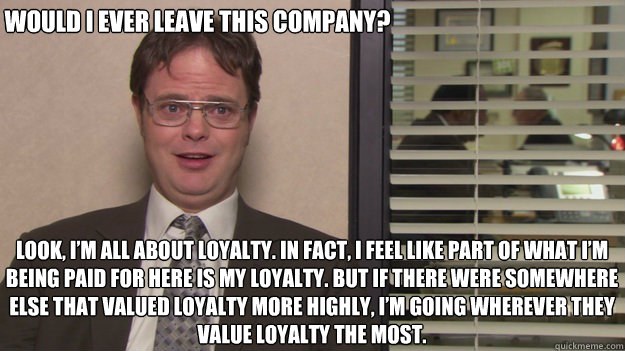
There’s a lot of civic pride and loyalty tied up in sports teams – but this feeling is not mutual. The Oakland Raiders are not, really, the Oakland Raiders. They are the Raiders that happen to be in Oakland. In 1982 they moved from Oakland to Los Angeles. In 1995 they moved back to Oakland. In 2019 or 2020, they’ll move again, this time to Las Vegas. I wonder how long they’ll stay there? 

Image result for dwight schrute loyalty meme

This problem of relocation is tightly tied to the stadium scam. Privately-owned sports franchises can and do threaten to move unless their local governments shell out for shiny new facilities. These threats have repeatedly been carried out, and with franchises burning their bridges with local fans in pursuit of greater profits.

For example, consider the Baltimore Colts 1984relocation to Indianapolis The Colts left after a decade of feuding with state and local government over a new stadium. Their owner wanted free stuff from the government, didn’t get it, and so he ran off to Indianapolis.

In 1969 the city of Baltimore announced they would seek higher rental fees for the old Memorial Stadium. The Colts owner at the time, , had been threatening to move for some time and complained that the old stadium was inadequate and wanted the city of Baltimore to build a new stadium. In 1972 the city unveiled its proposal to build a new stadium (the “Baltodome”) which would serve both the Colts and the Orioles.. They estimated this would cost the city $78 million – about $470 million in 2018 dollars. Interestingly, earlier that year, the ownership of the Colts changed hands in a deal that valued them at $16 million (1972) dollars – meaning that the city could have bought them out and turned this stadium giveaway into an actual investment.

The Maryland legislature and the Baltimore comptroller were not on board with straight giveaways. Despite Maryland spending significant public money on stadium improvements, Irsay wanted more public investment (i.e. free capital improvements) in the stadium, so he began to shop around various cities, looking for someone who would bribe him into moving.

Things came to ahead in 1984. Baltimore didn’t have the money to give away a stadium to the Colts, but there was legislation in motion that would give the city the right to seize the team using eminent domain. So Isray quickly packed up and snuck off to Indianapolis under cover of darkness. Indianapolis had bribed Isray with the promise of a $12.5 million loan, a $4 million training complex, and a new $77.5 million training complex – worth $30 million, $10 million, and $188 million in 2018 respectively.

All this bullshit rigmarole wouldn’t have happened – couldn’t have happened – if Baltimore had owned the Colts. Maryland or Baltimore investing in new stadium for the team wouldn’t have been a fiscally indefensible giveaway to wealthy owners.

Civic Ownership or Corporate Ownership?


Cities are financially (through the stadium scam and other mechanisms) and emotionally invested in their sports franchises. I think that this is a, on balance, good thing, since it fosters civic pride and a shared identity, brings in money for cities, and, of course, sports are a recreational activity that people enjoy watching and participating in.

The problem with private ownership of sports franchises is that is that cities are financially and emotionally invested in assets they don’t control. Private ownership is corporate ownership. It means that the team will always be acting to maximize its profits – even if that means betraying the love and loyalty of its fans, or extorting financial concessions from fans or politicians (who might be worried about being blamed for the move) by threatening to move.

Telling them why the Packers Are Objectively the Best NFL Franchise
Do we think the owners of a business will put civic pride before profits?

Public or civic ownership, by contrast, solves this problem – the people of the city have control over an institution that they are all emotionally invested in. The mentality, loyalties, and identities around a sports franchises aren’t like the mentalities and identities and loyalties around usual private businesses. People think, talk, and feel as if these teams are cultural or civic institutions – because they are.

That’s how sports franchises should be run as as non-profits or under public ownership. Like the Packers.

Monday, July 16, 2018

Why I Support a Land Value Tax


I’m firmly convinced that a land value tax  (LVT) is the best way to finance local government.

Here’s why:

  • The land value tax is efficient. Unlike other taxes (including property taxes) it can’t alter behavior, since the supply of land is fixed. A tax on alcohol sales results in less alcohol being supplied, a tax on gas less gas being supplied. But no matter the price of land, there is the same amount of it (at least for areas away from the coasts – and rising sea levels are hardly are response to property taxes!).
  • A land value tax taxes rents. In economics, rents are payments that don’t incentivize additional production or economic activity – and thus, from the perspective of society, something akin to wasted money. Again, the supply of land is fixed! All payments to owners of land on the basis of land value (as opposed to structure or improvement value) are rents.
    • Caveat: I’m not going full Georgist here and calling for the abolition of private land ownership. Because, for example, I believe that private landownership is justifiable for reasons of allocative efficiency.

Now why is a land value tax the best way to finance local governments?
  • The value of land is “location, location, location”. Thus a LVT aligns a city’s financial incentives with good government by making desirable city a city with the greatest tax base. A well-planned city, with qualitypublic services, amenities, transit, responsive local government, etc. will have higher land values than a poorly-run city.
    • This incentivizes density (if that’s what people value), transit-oriented development (and good transit planning), etc. and punishes any overly-restrictive zoning laws.
    • It also encourages allocating resources within the city to where they will do the most good – since land value is function of the quality of public services, especially education. For example, $100 more spending per pupil in CPS in the South Side of Chicago will probably go a lot further than the same increase in the North Side. Thus, from the standpoint of maximizing the tax base, a city would be incentivized to allocate resources where they get the most bang for their buck.

  • The second virtue of a LVT in the context of local government is that it puts the burden of paying for the city on the people who benefit most from the city – the businesses and individuals who locate there. Unlike a sales or gas tax, which raise money from non-residents, a LVT raises money by taxing assets located immovably within the city – and then spends that money providing services to enhance the value of those assets.

Now I anticipate some critiques and counterarguments (lets debate this!), so let me make some points ahead of time:

  • I’m aware of the problems (especially in Chicago) in assessing property values. Tax assessments should be updated when properties are sold, but often aren't. Land valuation would be a similar challenge, although I think it would actually be easier since there is less variation among sites than structures. (e.g. "Why is my 20000 sq. foot lot assessed at a different rate than my neighbors?") It should also be noted that property tax assessors already assess site value.
    • There are variety of mechanisms for getting more accurate assessments. For instance, a structures value could be estimated from insurance premiums against total loss. I may expand on this in a later post.
  • Additionally, many of the criticisms of a LVT are also true of property taxes. But you have to tax something to pay for the city, and I think that a LVT is the best option. Even if you aren't as in the tank for a LVT as I am, you should compare it to raising equivalent funds from a property tax as a question of practical politics.

Thursday, July 12, 2018

Something Topical

I don't usually write topical posts, but I just saw something that stuck in my craw. This latest executive order from the Trump administration is not good.

In a nutshell, it changes the procedures for the hiring and firing of administrative judges in a way that undermines their independence.

In the old system administrative law judges were hired from a list of "generally qualified judges" and had to go through the usual procedures of civil service hiring - competitive selection and examination, background checks, etc.

That changed.

Now agencies can simply appoint (and fire!) administrative law judges without going through any of those proceedures. The executive order justifies this change by citing a 6-3 US Supreme Court decision earlier this year that held that administrative law judges were "officers of the court" not federal employees.

All of that you could have gotten from reading the first link here. Now let me explain why this is bad. 

By volume of text, the bulk of the law in the US isn't statutory (i.e. Congress passed a law) but administrative (Congress delegated rule-making authority in some area to an executive agency, with a certain mandate). Think regulatory agencies like the EPA, the SEC, etc.

When people want to dispute fines, regulations, any matter relating to administrative law, that ends up before an administrative law judge, who is to quote Wikipedia: " a judge and trier of fact". These proceedings are bench trials (that mean no jury). 

So if the EPA alleges I poisoned Lake Michigan and fines me, and I dispute this, an administrative judge decides the punishment I'd receive if guilty, and whether or not I actually poisoned the Lake. Creating the potential for a shamelessly corrupt official to dismiss the EPA's case against me with alternative facts - or decide against me regardless of the facts.

Now administrative judges have always had this power. But before abusing this power was less of a concern - they were career civil servants, insulated from political pressures and subject to the normal constraints and scrutiny placed on civil servants - and protected from arbitrary firing like other civil servants.

Now the President or his appointees can appoint or fire them at will. Bribery is illegal, of course. But you could still sway the decisions by appointing crackpots who believe whatever B.S. passes his desk, as long its on the side of business ("Arsenic is an essential mineral", "kids need lead to grow up healthy", "humans aren't causing climate change").

TL;DR, the administration is undermining the independence of a judiciary, and creating a lot of opportunities for graft and misconduct. You don't have to be a cynic to think they'll take advantage of those opportunities.